Showing posts with label Second Life. Show all posts

Mar 1, 2018

A Tale of Two Labs

Insight from my trip to Linden Lab and Beyond


Ache's Garage B


Clarity From Chaos


The sun shone down that day, caressing the silver Passat on I-5 as my assistant and I rolled through the unending fields of almonds which so graciously seem to blanket much of the California hills. Aside from the occasional confused cow (which I named Carl), there was little else to keep my mind occupied.


The radio in these parts seemed to assault my senses with either Spanish, Country Music, or Evangelism. It was clear I needed to turn that noise-box off for a bit and clear my head.


Sipping Carolina Honey Argo Tea (my favorite pretentious tea), I contemplated what was ahead and the shear insanity of it all.


After all, I somehow decided one day out of the blue to cart my balls around in a wheelbarrel and invite Ebbe Altberg, Samy Montechristo and Orion Simprini to hang out. It’s at this point, I usually get the obligatory “How did you get a meeting with them?” question.


A: I simply asked.


Now, whether that speaks to me being important or not is up in the air. Maybe if you asked, they’d schedule you in as well?


Ok, Michelle will schedule you in… she’s Ebbe’s assistant. Maybe the guy wanted a court jester for an hour? Maybe Ebbe stared out the window as I left and said “What the hell just happened?” Who knows…


At least Orion and I have talked back and forth for years and have always wanted to hang out with each other… so weirdly, asking a freakin pop-star to hang out is less crazy than asking the CEO of Linden Lab if he wanted to hang out, but I figured “Why the hell not?”


We had been on a road trip down to San Diego (from Portland, Oregon) and decided a few pit stops along the way were essential if we were going to make the best of this coastal crusade.


Will in San Diego


Of course, a few days in San Diego with friends were mandatory, as were a few days in Carlsbad at the Grand Pacific Palisades Resort. Walking into the place, a staff member asked if I would like some champaign as my assistant was checking us in. Pretty fancy stuff, that. I’d highly recommend booking there if you’re in the area, especially if you get the concierge service.


Further on our way back up, I had arranged to meet up with Orion Simprini (lead singer for the Orion Experience) around Los Angeles. He and I had been bantering back and forth with each other since around 2011, and with both of us from the Tri-State originally (NY, NJ, PA), we always figured hanging out would be easy…


And yet, all these years our schedules and locations never managed to coincide. Until today, where I sat at the corner of Manhattan Avenue and Pier Avenue at Java Man Coffee House by Hermosa Beach sipping my mocha latte, and listening to Children of the Stars when the man himself strolled up.


Will & OrionWe hung out around Hermosa Beach on the pier, kicking our feet up and blowing each other’s minds. Orion was really interested in the idea of doing 360 music videos and VR experiences, so I walked him through the different approaches and what they all meant in terms of production and control.


My boy just sat there with his mind blown at the world of possibilities. At the end of it all, we both hit on a film project that seemed crazy enough to work and I agreed to be a technical advisor and collaborator.


“In the virtual world, you’re God. Nothing exists in your space unless you put it there, and how good it is depends entirely on your attention to detail.”


Of course, you’re not here for that story…


The San Francisco Treat…


As awesome as hanging out with Orion was, I still had other business to attend and a tight schedule (as my assistant loves to keep reminding me). So we bid farewell and continued our drive back up to Redding where we would spend another night.


On the 21st, I was scheduled to roll into San Fransisco and stroll into Linden Lab


People have asked me a plethora of questions about this visit, and I’d like to preface with the disclaimer that the moment you walk into Linden Lab and sign in, you also sign an NDA. For the sake of not disclosing confidential information, this post will focus on just things that I’ve said, the obvious general information (that already is discernable or public) but not specific answers from Ebbe.


Just to make clear: I absolutely do not speak on behalf of Linden Lab, and anything disclosed here is either:


A) My opinion

B) Common sense (and/or public)


What I knew going in, was a bit scarce. So I simply took anything I saw there in the offices as “NDA” and that Ebbe has been trained by ninjas to seek and destroy.


I hadn’t really spent a ton of time in SANSAR prior to this day, but I did think it was kinda impressive for what it was. When answering the Facebook question about Ready Player One and Linden Lab, I was answering generally that they hadn’t dropped the ball there – but wasn’t going into details.


When Ebbe strapped me into the Oculus headset and toured me around SANSAR, I just took everything as “under NDA” as a precaution. Of course, Ache’s Garage was impressive and answers the “Did they forget about a Ready Player One Tie-In?”


Well, no… but I’m guessing if you keep up with the news in the world of Linden Lab (and our wonderful bloggers around the grid) then Ache’s Garage is old news by now. I haven’t been keeping up on those news bites, so Ache’s Garage is new to me (and impressive).


Will & EbbeI did get some interesting insights though during that discussion that maybe weren’t openly reported… more general thought experiments from Ebbe. I wouldn’t necessarily say this is top secret, but more like – we really hadn’t thought of things like that yet but it would be common sense if we thought about it.


Of course, Linden Lab worked with Warner Brothers and Intel and HTC for Ache’s Garage. It’s a great CES demo for sure – at least for the stage that SANSAR is at. Steven Spielberg has seen it first hand with Ebbe – but that is par for the course since I know Spielberg is really anal about how his creative works are represented elsewhere – so Ache’s Garage (like anything else) would need his blessing. Hearing it out of Ebbe that way made me chuckle internally because it’s not the first time I’ve heard similar in the industry about Spielberg.


Would Spielberg or Ernest Cline pop into Second Life or SANSAR for the movie release? I’d prolly say no, but then we already know that Ernest Cline has an account in Second Life, so how do we know the dude isn’t hanging out right now?


Spielberg… ok, that’s likely a “Hell no”. He doesn’t have time for that beyond a cursory one time stop-in. He’s Steven effing Spielberg.


There’s a good reason why SANSAR would be the go-to for companies like Warner Brothers for virtual world experiences. It’s generally because they want absolute authoritarian control over their intellectual properties, and Second Life (being you) scares the ever loving hell out of them.


To them, Second Life is like the inmates running the asylum. Of course, I always have contended that the chaos is manageable with the right approach.


And while SANSAR looks gorgeous, it still feels quite sterile. It’s more a static museum of spaces, versus Second Life which is entirely organic in nature. Each has a purpose, and I’m absolutely enthralled by the future.


But it still stands that the general public wants more than “pretty” when it comes to VR. They want (need) it to be of substance.
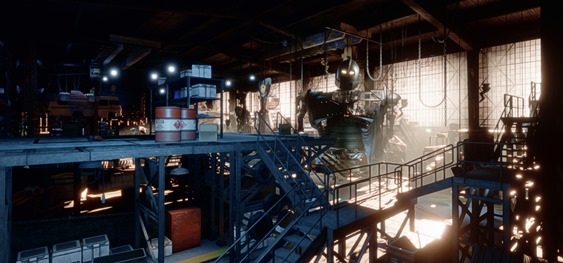


Aeche's Garage - SANSAR


[HTC] Ready Player One – Aech’s Garage

Picture: Inara Pey


Of course, I could be wrong about Linden Lab throwing the doors open for Ready Player One… but I’m actually hoping I’m not wrong. Because opening the floodgates to SANSAR right now, with Spielberg in Aech’s Garage would be very, very, bad for SANSAR.


SANSAR is a work in progress, and noticably so. That doesn’t mean it can’t be better over time. But if you were to try and throw it into the spotlight partially finished, the public would shred it and hold it up as an example of why Virtual Reality is failing and not succeeding. The public would compare it harshly to other more polished systems… and that’s unfair at this stage of development. In short, it would be the same mistake Philip Rosedale made with Second Life, so I’ll give Ebbe the benefit of the doubt and assume he knows not to repeat history.


I believe SANSAR is a good beginning, but it’s late to the party. There’s places like VRChat and Sinewave.Space that are much farther ahead as a platform to develop VR content with.


I’m sure there are other platforms as well, but I can’t be bothered to write out a laundry list.


Not that it matters. When it comes to VR Headsets, we’re still in a phase where engagement is measured often in minutes (20-30 minutes), whereas non-headset VR worlds like Second Life see an engagement rate measured in many hours.


SANSAR is a nice place to visit, but I wouldn’t want to live there.


Why Linden Lab is so hellbent on pushing SANSAR while effectively ignoring SecondLife, or treating it like the wicked red-headed step-child internally, is anybody’s guess. But I’ll touch on this more later in the post as I feel it deserves its own section to qualify.


That being said, the insight gained here was along the lines of all the assets these companies have already sitting around in 3D Models. IKEA for instance has their entire catalog in 3D models, Warner Brothers obviously has a massive asset library at their disposal, and so on.


So there is this opportunity to connect these Intellectual Properties into the virtual world – and that’s something Ebbe and I discussed while I was there. Not just “officially” converting existing assets from these companies into say, Second Life and SANSAR, but (and since I brought it up, I’ll assume it’s not covered in NDA – just the answer that Ebbe gave me) by converting the pre-existing user-generated content in those systems from IP Infringing content to Sanctioned under a “Brand Ambassador” program.


If you read this blog, then you know I’ve talked before about the premise of VIPER Licensing – and the question would be:


We all know if you cut off one head of the Hydra, ten more grow back. Why fight this when you can effectively leverage it so everyone wins?


The idea is to let Linden Lab be the “Steven Spielberg” figure and pre-negotiate those licenses on behalf of the userbase, create a best practices guidelines for the usage of those IPs, and then stamp the pre-existing content that we all know exists on Marketplace but “shouldn’t" as brand ambassadors.


Of course, Linden Lab would up your transaction fee to 25% on real world branded merchandise you were making virtually. 10% for Linden Lab and 15% for the IP holder (Coca-Cola, etc). But that still leaves you with 75% of the revenue, and a massive amount of creative freedom without the DMCA fears so long as you follow guidelines for representing IP in a way that doesn’t tarnish the brand.


Now, I can’t tell you what Ebbe said in that office concerning this. Whether Linden Lab explores this is anybody’s guess, but I put it on their whiteboard and tried my best to explain it to him.


The IP problem still persists in SANSAR as well, since an arcade full of Nintendo IP likely isn’t sanctioned by Nintendo for SANSAR. And while I absolutely think this stuff should still exist (and will, regardless of what we do), I think there is a better way to address how we deal with this prosumer culture in the 21st century and especially with user-generated content platforms.


DMCA just isn’t getting the job done, and likely is throwing gasoline on the fire via Streisand Effect. Being authoritarian about it all and trying to tightly control the creation process by requiring approval for uploaded assets would likely stifle and kill SANSAR, unless Linden Lab negotiated all those pre-existing assets from IP holders into SANSAR and SL themselves… which kinda defeats the purpose of user-generated content, and companies never seem to know what use cases people need in a virtual world, so people will still end up filling in the gaps with their own content.


So maybe the best approach is to leverage and manage the chaos instead of trying to eliminate it?


Land Prices


Another conversation I had with Ebbe was about those land prices. It was a question posed in the Facebook post so I made sure to ask. It was kind of a side-note to another conversation about the structure of Second Life being based on land sales, and a way to balance the equation through other means.


I won’t say what those other options were that were presented in the conference room. I will say that Linden Lab is fully aware of the land price “issue” and looking into ways to lower the costs.


Now, after I had stated this for Wagner James Au on his blog (New World Notes), I was contacted in-world by a few Land Barons who (you could say) were slightly paranoid about this situation. If land prices went down, they would reason, then everyone would just buy land and get into business for themselves, putting them out of business and killing their investments…


I don’t see it that way, honestly.


I think competition is healthy, and spurs innovation. So I guess you just can’t get away with an auto-mat system and a couple of volunteers working for tips and commission anymore. May have to invest in treating those companies more like companies, I guess?


Like I said, if land prices came down – it’s not without a sacrifice somewhere. Linden Lab is a company, not a charity. So you better believe they’re making the money up somewhere else if they do.


As per the responses given to Wagner for NWN, I’d like to point out that I was using a cell phone and in the middle of a 4 hour drive up the coast. Not exactly the best situation to collect thoughts, which is why you can consider the NWN post a “rough draft” so to speak where this post is collecting my thoughts better.


F!@#ING LAG!


The other obvious question while meeting with the man himself came as a side question from Facebook that I saw concerning addressing lag in Second Life. I had already planned on presenting something that would drastically reduce lag (and bring a plethora of other benefits) in the right hands, so “reducing lag” in Second Life is a side-effect of this particular topic at hand.


The thing about Second Life is that lag is often inevitable. The way that game engines work is that you’re either in edit mode or the simulation is published. When you play video games, it’s all published and locked down. This gives the engine a chance to pre-bake textures, add in lighting calculations and optimize the scene. Before that, in all game engines, there is the live editing system which lets you place and design the scene with assets in a lower quality mode prior to optimizations and lighting calculations (and so on).


Unreal Editor

Unreal Engine: In-Editor Testing


Now, we can say that the “low quality” edit mode has come a long way over the years whereby it is on par with amazing graphics nonetheless. I remember editing levels in DOOM in the 90’s where it was just a top down map in wireframe before calculating the nodes and publishing the map, where I would then walk around to explore.
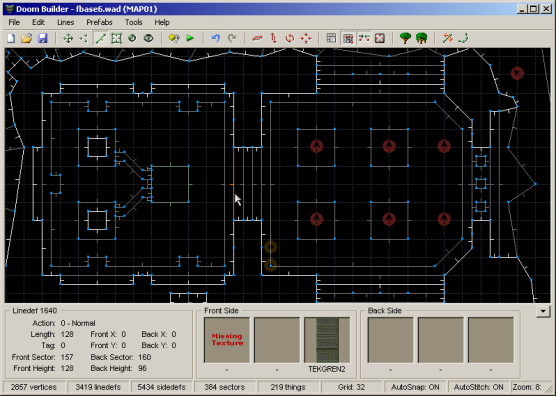


Doombuilder_mapedit1


Second Life (as with any live edit system like ActiveWorlds) is just the game engine in permanent edit/preview mode. Those extra optimizations to the scene cannot happen and so things are slower.


That doesn’t mean it’s hopeless.


We can begin by optimizing our assets for a game scene, and choosing a balance between complexity and looks. There is, of course the idea that Second Life could introduce the idea of User Generated Zones.


For this, I’m borrowing from my years in the ActiveWorlds universe (before Second Life existed).


Zones 


The idea of Zones is simply that you use Prims with extended properties to better control spaces in a scene. Whether that is to say – Particles originating outside this zone do not enter it (or vice versa), or to say Assets within this zone do not load until a user enters the zone.


These are all options that were and remain available in ActiveWorlds to this day (20 years later). The idea of user generated zones would instantly make things like Screen Space Particles (Weather) possible without it raining in your house. Doing this, you could also (in theory) run a script that changes the weather on the sim based on a location API call to a weather service.


The zones can also be used for user-generated culling spaces, which (if used properly) can drastically reduce lag in a virtual world – expecially in a highly dense and populated sim.


Of course, there are other benefits to Zones. One of which is assigning smaller spaces in 3D for builders or rights. An example here would be:


Think of an apartment building. There are maybe 20 apartments in the building. Now let’s say you could offer each apartment privacy, localized building, etc like parcelling without the all or nothing blunt instrument but instead using a more surgical approach.


For a more in-depth idea of what zones can do, just click the link above for the ActiveWorlds Wiki description.


Weather


Suddenly, weather built into Second Life doesn’t seem so crazy anymore. When last I checked, Windward Mark was wholly owned by Linden Lab (its parent company). So if Linden Lab got Windlight out of the acquisition, I would imagine they also got the weather system that came with it by default.


Yes, I personally backed up the Windlight demonstration video from Windward Mark Interactive about 7 years ago on my YouTube Channel precisely for this purpose.


Even if they somehow didn’t get the weather system, it’s not like a screen space particle system isn’t a turn-key solution these days from other 3rd parties or even in-house.


It’s there… sitting on a shelf unimplemented. The point made above concerning implementing Zones solves the original problem for not implementing Weather in Second Life 7 years ago. Of course, Zones solve a ton of other things while it’s at it.


Particles


About the only thing I have to say about particles is that it should be integrated into the toolbox (create) menu floater with the rest of the tools.


Yes, you should still be able to script particle emitters if you wish by hand, but there’s really no reason to have left the WYSIWYG editor for it out of the toolbox.


Again, ActiveWorlds made this happen years ago, so it boggles me why this is still a point of contention in Second Life development.


One of the things you’ll notice on the Wiki link is that there is a Particle Type drop-down. Sprite is selected in the picture by default and it’s the “Screen Space Particle” used (most often) for Weather effects.


Particle_properties


“What about the user made HUDs sold on Marketplace to handle Particles?” you may ask.


It is my contention that when your user base creates elaborate work-arounds to fill in functionality gaps for your product, it’s time to make it a priority for native integration.


See Also: Somehow nobody thought a web based marketplace system would be needed officially for Second Life until XStreet sprang up via the end-users and eventually was bought out by Linden Lab.


This should have been native in the toolbox from the beginning, and it’s mind boggling that this many years into Second Life, it still isn’t.


Of course, I say that about weather and zones as well…


Making Mirrors


Of the other subjects that I brought up was how to implement mirrors in Second Life without causing a ton of lag.


I’ll just let the link above explain it.


The Tale of Two Labs


Why Linden Lab is so hellbent on pushing SANSAR while effectively ignoring SecondLife, or treating it like the wicked red-headed step-child internally, is anybody’s guess. But I’ll touch on this more later in the post as I feel it deserves its own section to qualify.



28337343_10212055853131678_4474012829395806107_o


And now we get to the bigger question.


As noted by Bixyl Shuftan, and his apparently keen eye, Linden Lab has laid off about 12 people recently, and their VP of Product apparently has resigned to go work elsewhere.


In relation to my view of Linden Lab during my visit, and what Bixyl has found from Glassdoor reviews by former employees as of recent (which I’ll share here):


The other review from an anonymous employee, "Make LL Great Again" was less critical. But he still had a negative outlook, "Company is too focused on its new product; those who work on the mainstay feel set aside and taken for granted. HR is nearly non-existent; most team members are remote or barely in the office. Too many org changes lately have left folks feeling insecure, morale is low and sinking. I hope they can turn it around." His advice to the Lab's leaders, "You have some really awesome people there; get out of their way."


While I was at Linden Lab, I definitely got the feeling that SANSAR was the main focus with a near total avoidance of discussing Second Life or its future. It’s technology evangelism at its peak.


As far as Ebbe is concerned, he’s all-in for SANSAR while Second Life is … somewhere in the basement level with the engineers.


On one side of the equation I can see why Ebbe would be all-in for SANSAR. I’d assume Linden Lab spent a stupid amount of money developing it and couldn’t afford to pull the plug, and so he was likely told to produce an ROI come hell or high water.


Welcome to the board of directors world.


In a way, I’d assess that Rodvick made a mess and Ebbe is still trying to clean up and/or salvage things.


That being said, I have to agree with said anonymous former employee.


As a CEO, Ebbe has a choice to make – He is the captain of the Linden Lab ship, but he also decides what sort of captain he wants to be:


Captain Picard or Captain Ahab.


Right at this moment, he’s showing qualities of Captain Ahab, in the blind pursuit of SANSAR (Moby Dick). But I believe he’s intelligent and an overall great guy. Smart enough not to sabotage his own efforts and company.


After all, Second Life is still the goose that laid the golden egg. It didn’t die, it’s just being actively starved and strangled by the aforementioned organizational changes and CEOs.


Which is really unfortunate, because I also believe Linden Lab also has some brilliant and creative people there with their hands tied, and who absolutely love Second Life and want to make it better.


While I don’t have a Linden nametag myself, I pushed my devotion for virtual worlds as far as I could take it by crossing the country (New Jersey to California) and making sure I was physically parked in front of Ebbe at Linden Lab, with a whiteboard, to discuss some of these things (and more).


That’s some devotion right there, and… sadly, is as far as I can/could take things short of working at Linden Lab officially.


What Linden Lab does with the information is up to them. I’ve done all that I can in the process, and will turn my attention back to other projects.


I don’t suppose I’ll be coming back to San Francisco unless somebody gives me a damned good reason.


Nov 13, 2017

Arcade Exchange Update

Revision 2.95


Arcade Exchange Magazine [Attention]


Marketplace: http://marketplace.secondlife.com/stores/22206


What’s New


AES (Audio Engine System)


When we first built the arcade series, we weren’t entirely knowledgeable about scripting in the high-end. Of course, there was the llPlaySound command to handle short clips, but when you’re dealing with arcade machines that have audio loops measured in minutes, even for the attract modes, you can see how this falls short as a solution. Stringing together the audio commands with llSleep in between only goes so far, and when you begin extending the amount of files needed in that loop, the rest of the menu system begins to stall while it waits for the audio and sleep commands to complete.


This has been an ongoing issue for the life of the Series III Arcade Exchange, but we’re proud to announce that as of Revision 2.95, it is no longer a problem.


We’ve re-written the audio engine system (AES) to be more dynamic, pre-load items in advance, and handle hundreds of audio clips in a loop without interfering with the main script.


What his means for you: The menu system is now responsive, even when playing the audio loop, as the AES has been separated into its own script and handler to multi-task.


As a result of the AES upgrade, your arcade machines are now able to loop many minutes of audio when toggled – in many cases, an entire run through the game itself.


That being said, please keep in mind that the pre-loader is not an indication of actual time to pre-load but merely an estimation. The actual time to pre-load and play those clips is entirely dependent on your connection speed and other various factors such as sim lag and Second Life itself. You may not hear the entire loop the first time through because of this, but we’re pretty certain the second time through you will.


Support Call Decal


Warranty StickerOn the back of every arcade machine, there is now an Andromeda Games Support Decal (Upper Right Corner). Because your arcade machines are under “Second Lifetime” Warranty, you can always trade-up to the latest revisions or have broken machines fixed for free. However, it hasn’t always been clear who to contact or get in touch with to handle this. Sure, we put that warranty information into your Instructions card that is included, but we also know that customers aren’t always interested in reading.


As a result, we’ve put the support call decal on the back of every machine, and made it an active call sticker. Which is to say, if you click on them, it’ll give you the warranty information, and contact for support. It’ll also page me (Aeonix Aeon) in-world and let me know who is requesting support and what machine you’ve invoked it on.


We don’t think it gets any easier than this, really.


Various Updates


There have been some amount of various issues (minor) which have gone unfixed in the past on our arcade machines. While not all game-breaking, they did warrant another look during this update and a correction. TRON, for example, had a minor alignment issue with the side panels which left a small gap. The Glow was set way too high, and so on. It is also currently one of two arcade machines that do not have an animated screen (Space Invaders being the other). With this machine there are some technical limitations in-world which we haven’t quite sorted out yet – the screen is not uniform and due to the complexity involved with the build (geometry and faces) it isn’t feasible to animate the screen as of yet. We’re still looking into it.


Fix-It Felix Jr has had the animation set for the screen re-done with better quality, and the audio is now much better without the lag. However, this game is only available in the Arcade Exchange Mega-Pack as a bonus.


Joust had the same panel alignment issue as TRON, and so it was also corrected in this update.


Tetris as of 2.91 and earlier is now broken – the game itself no longer works. The 2.95 update corrects this.


Instruction Card


The instruction cards on all of our Arcade Exchange have been entirely redone for legibility and to include new information. This includes a better explanation of your warranty so you know what is and is not covered. I’ve made the card more unified with ASCII headers and such, so now it should be quite easy to discern all the main topics as you scroll through. The same has been done to the card for “How to fix Flash for Second Life”.


Marketplace Availability


During the long tenure of the Series III Arcade Exchange, our customers will have noticed that the original premise of the name meant that you could purchase only the Polybius arcade machine on Marketplace and then trade it in-world for the one you really wanted. While available in-world via our vendor boards at certain locations, we didn’t make them available on Marketplace directly.


That is until recently.


There are many pros and cons to doing this, and most importantly is that being a near perfect replica of the original arcade machines in real life poses a bit of a problem. Many hours of debate and discussion have happened over the years about this very issue – IP Infringement.


While we absolutely will not contest that our arcade machines are IP Infringing, there is a deeper explanation about why they should be left on Marketplace. If you read below, we’ll get into those details.


Marketing


One of the other things you may have noticed as of recently is that the ad-copy and marketing for our products has been updated to be more uniform and professional.


Arcade Exchange - QBert [512]Having a real life marketing background helps in this case, in that I used to work for Pulse Point Media as a VP of Operations.


Now, just as a reminder, when I use “we” and “I” in these posts, it’s a matter of who in AMG I’m talking about. I refers to me (Will Burns, the founder) and We refers to the rest of the team involved with the products (such as RobsterRawb Jaxxon, Jon Dragoone, et al) inclusive.


When writing these blogs, I’m writing them on my own and so it’s always coming from “me” as a representation of the group interchangeably. Just wanted to clear that up in case you were wondering.


In any event, as I have had years of marketing experience, I decided to go ahead and apply that to our forward facing image by creating proper ad-copy for our arcade machines. A unified look and feel so to speak. It is purposefully reminiscent of an Atari logo in a subtle fashion.


I think it’s something you don’t normally see with a lot of items on Marketplace or in-world. Of course, the bigger brands do this properly, but that’s the difference between the big kids and inexperienced. Doubly so for the listings involving Arcade Machines on Marketplace – but we’ll get to that below.


The ad-copy is mirrored on our boxes now, and the look/feel is also in our magazine advertisements (as you see above at the beginning of the post). We regularly advertise in both Attention! Magazine and Playdolls as a two page spread. It is clean, gets attention, and gets to the point with a visual and short, witty slogan.


We’ll be using this format going forward.


Backstory


In the course of the Series III Arcade Exchange, we’ve undergone quite a lot of updates and revisions. Originally conceived in 2010 before Second Life had mesh ability, it was a major overhaul when we started updating them all in higher quality mesh.


Back then, and even today, we spent quite a lot of time sourcing our materials and pouring over reference photos for the arcade machines in real life. There was and still remains a lot of points to why we would go to such painstaking trouble with these builds for what amounts to a virtual product with a limited audience.


VIPER Licensing


One of the biggest issues with doing something like this is the obvious elephant in the room: IP Infringement. In the modern age, it is considered the scourge of IP Holders, and takes up quite a lot of time attempting in vain to police their Intellectual Property online.


The standard tools for this give those IP Holders the legal precedent to DMCA or issue a Cease and Desist order. On Youtube, we see this as “Copyright Strike” where a claim is filed against a video.


But does this really solve the problem? It’s a never-ending battle that is both costly and time consuming, with little result. You win battles but arguably are losing the war.


In the example of the fan created game AM2R (Another Metroid 2 Remake), it was a brilliant game made by fans out of the love of the game. In my opinion, it absolutely did justice to the franchise and IP. However, it still remains that they did not have permission from Nintendo to use that IP and so Nintendo issued a DMCA to take it down.


But here is where it gets tricky.


The tools of DMCA and C&D are not effective in the bigger picture. If anything, it is akin to cutting the head off of a Hydra and being surprised when it grows back a thousand heads. What DMCA and C&D invoke in the modern age is known as the Streisand Effect – which is to say the thing you want to get rid of instead draws more attention and becomes more available as a result.


In the case of AM2R, this was true. Yes, the fans who made it took it down and complied with the DMCA, but those who had already downloaded it simply mirrored the files all over the world and on BitTorrent.


If anything, AM2R ended up with far more visibility in the media and higher accessibility as a result of the DMCA from Nintendo. In short, it had the opposite effect they wanted. Their strategy backfired spectacularly.


Back in 2013, I wrote a chapter in a college textbook whereby I outlined the solution to this miserable state of affairs: VIPER.


In the beginning, I outlined that IP Holders rarely (if ever) have a clear avenue to pursue in the instance of user generated media. For instance, most companies have a clear protocol to handle either a Producer of content or a Consumer of content, whereby a producer is seen as a large media firm that can pay a large licensing fee up front and a consumer is just the person who is expected to buy such items or be exposed to what the producer has created.


But what about the prosumer culture? The user-generated media made by the consumers as non-professional producers?


This is where we get into the grey area of legality and approach as we look at spaces like Second Life. Yes, those companies have every right to issue DMCA notices to take content down – but is it effective? In this case, the answer is absolutely not. If anything, it only exacerbates the problem as we see with AM2R.


You take one down and twenty more pop up to take its place.


So the premise of VIPER is to be an effective tool for IP Management in a user-generated content environment. Something that Second Life is sorely lacking, and companies in the real world do not currently subscribe to, which is exactly why we see this Streisand Effect continually playing out despite their best efforts.


VIPER is an acronym for: Virtual Intellectual Property Engagement and Recourse. The premise is simple: to manage IP on the prosumer level effectively and without the content explosion back-fire otherwise seen with typical DMCA approaches.


In the case of the Arcade Exchange, the premise is quite clear – to make available the best options for those media examples as a poison pill approach to IP Infringement. If high quality versions exist, it makes the countless low quality knock-offs irrelevant and so they will slowly cull themselves. By leaving the best options to fill a need in a space whereby a company would otherwise not be engaged, it has far more positive impact in regard to IP Management and Protection than had the same companies sent an army of lawyers to issue a paper storm of DMCA notices.


In short: Absolutely, these arcade machines are IP Infringing. By no means should DMCA take-down be implemented as a recourse. They are there to actually cull the plethora of existing knock-offs that are low quality, and in effect have the actual intended outcome that the constant DMCA take-downs and account bans have tried to accomplish all these years.


VIPER is a mindset that follows one of the biggest rules in user generated worlds; Whether that is the hobbyist at home making a fan game, somebody making creative content on YouTube (Adult Wednesday Addams for example), or virtual worlds like Second Life: Work within the system.


In this case, “the system” means not the legal recourse you’ve been given (DMCA etc) but the mentality of the community by which the IP is existing.


In order to understand VIPER licensing mentality, you as a company must ask a few questions to qualify the action:


  • 1. Will a DMCA result in the desired outcome, or will it backfire and cause a Streisand Effect?


  • 2. If our end-goal is to reduce or eliminate the IP Infringement, protecting our intellectual property, then would engagement in the system to fill the supply where there is clearly a demand actually achieve this end?


  • 3. What is the least involved manner by which we can accomplish #2 on this list?


  • 4. Does it make sense to engage and ask for a marginal licensing fee on each sale of said item in a virtual world (percentage) or is it enough to sanction the item as a preventative measure to cull the majority?


The answer in this case is obviously to identify the best version of the IP Infringing material and sanction it. However, one must also be willing to leave the other low quality versions alone to their fate as a result. This is how to eliminate the Streisand Effect in virtual worlds and elsewhere while actually accomplishing your end goal.


That doesn’t mean as a company that you should be saying “This is an official product” of our company. What you’re really saying here is: This is a licensed product in a virtual sense, we acknowledge it, and it represents the IP and brand in a positive light. It is the responsibility of the content creator to handle the sales, the marketing, the updates, and customer interaction.


In the event that said virtual item no longer represents the IP in a positive light, then you have a dialog with the end-user about how this can be corrected (reasonably). Again, we’re not going into things DMCA-Akimbo. After all, you’re running the risk of punching a hole in the dam of IP infringement and letting the torrent of knock-offs take its place.


We clearly don’t want this to happen.


This is also entails that companies (internally) set up some sort of “Best Practices” guidelines exactly for this purpose, and to convey to the end-users (consumers) that should they wish to use the IP in this manner, these are the rules they must follow.


Of course, in this document, the point is to be fair about it. So don’t go into it with massively unbalanced disincentive. In example – saying “Sure, you can make and sell this in a virtual world, but we expect a 90% cut on money earned.” or “Sure you can make this but you cannot sell it in the virtual space or make any money on it.”


Let’s be real here. If your goal is to cull the IP Infringement and protect your IP, it does you no justice to create a hostile environment whereby it makes more sense to just ignore you and do as they please, albeit in a less visible manner.


See also: BitTorrent and AM2R.


You absolutely don’t want to drive those virtual goods underground, because then you’re really screwed. So be fair about it, make some light concessions, and be willing to work within the system and with the end-users themselves to achieve these means.


The perceptual cost of those virtual goods sales versus the amount of money you’ve been burning trying to DMCA everything is like night and day. The perceptual loss of revenue from said virtual goods is negligible by comparison and is far less than what you would spend to police it otherwise.


So instead of approaching as a loss, approach it as a quadruple positive in your favor -


1. The loss of perceptual revenue from said virtual item costs you far less than trying to police it via typical DMCA means. Instead of counting it as a loss, count is as time and money saved. You could be paying lawyers ten or one hundred times as much to have zero impact on the state of affairs versus the negligible loss of the virtual item for sale having a massive impact on the state of affairs. It just makes perfect business sense.


2. Because the items in question are high quality, consider them as a marketing gain instead of a lost sale or cost. You’re not paying for that marketing, nor the time it takes to create the items and maintain them. You’re not paying the person responsible for making it either. You, as a company already know how costly this normally would be if you hired a marketing firm to develop this sort of content and maintain it. Again, this is advantageous to you.


3. High quality items in a virtual world represent your brand in a positive light and are the antithesis to low quality knock-offs, thereby killing two birds with one stone that costs far less than the DMCA nuclear bombs you’ve been using that apparently couldn’t hit the broad side of a barn. It is actually effective, and that’s what you’ve been trying to accomplish all this time – isn’t it?


4. Instituting negative penalties for IP Infringement when it is presented in he best possible light to do justice to the brand is actually counter-productive in the most exponential fashion possible.


Allow me to expound a bit on the last point further.


Normally, yes the companies can issue a DMCA to Linden Lab concerning said items. Linden Lab would, therefore be legally required to comply, and as a result likely issue a temporary or permanent ban on my account in the process. This, again, is typical. It happens the same way with YouTube, and elsewhere.


But here’s the fallout from those actions:


1. The highest quality items would no longer be available, thus creating a void to fill in the market.


2. That void would quickly be filled not with one but likely dozens of IP infringing materials to take the place of the dam you just broke.


3. What is eliminated on the open marketplace will thrive in-world under the radar, making it impossible for the same IP Holders to find.


4. You’ve punished one creator for doing the one thing you actually needed done, and undone the positive outcome of those actions while vastly multiplying the negative outcomes. You’re back to square one.


It wouldn’t make any logical or reasonable sense to therefore issue a DMCA or Account Ban. There’s literally no positive outcome to doing so, and it amounts to dropping the bomb on your own foot making matters worse instead of better.


That doesn’t mean companies will listen to reason.


VIPER is simply an appeal to reason, and to accomplish the IP Management companies so desperately need in a world that is exploding with content. The definition of insanity is doing the same thing repeatedly and expecting different results.


What the Arcade Exchange represents is a viable means to accomplish exactly what the owners of the IP have been trying to do all along and have been failing at.


High Quality vs Low Quality


When it comes to virtual worlds, or any other media, there is no shortage of high quality examples. Just the same, for every high quality example there are ten times as many low quality “cheap” knockoffs.


Vendor-GALAGAYou can very well buy a Galaga arcade machine on Marketplace for 99L$ and you’d get something like what you see to the left from Brazilian Surf.


Yes, it works (if you’re lucky)… but that’s about it. What you’re getting is a generic cabinet haphazardly retextured with a media prim glued to the screen.


It doesn’t have the game history, it doesn’t have an extended audio loop, it doesn’t have an animated screen, and more importantly it looks nothing like the actual arcade machine. We’re not even certain it has any sort of warranty or support if it breaks. This is the standard fare when it comes to arcade machines in Second Life.


Arcade Exchange - Galaga [WIDE]Then you have the Arcade Exchange version of Galaga to the right which, as you immediately notice is of much higher quality and detail. It has far more features than the cheaper knock-offs, and is jam-packed with attention to detail.


If you were Midway (or whomever owns the rights to Galaga), which one of these would you want representing your IP?


Only one of them actually does it justice, and that is the entire point of VIPER.


We’ve supported the Arcade Exchange since 2012, with bug fixes, updates, and revisions. As of Revision 2.95, there is a service call sticker on the back of them all to quickly and easily contact us if ever your machines break or you would like to trade-up for an update.


So long as you own one of our arcade machines, we will support them and continue working to make them better.


Aug 28, 2017

The Art of Deceit

Persona Ambiguity in Virtual Worlds


stop-lying-it-hurts-people-712


Also known as a continuing misrepresentation, lying by omission occurs when an important fact is left out in order to foster a misconception. Lying by omission includes the failure to correct pre-existing misconceptions.


In the Metaverse, whether a virtual world system or the Metaverse as depicted in Ready Player One, there is a curious complacency inherent for the act of being dishonest. It’s one of those things which is taken as read and even adamantly defended. We have a right to reasonably privacy in the online world, and this includes basic facts about ourselves with which we would like to not disclose in favor of living our idealized avatar life.


Maybe you’re married, so your avatar persona is single. Maybe you identify differently than your genetic gender, and so you play the opposite in a virtual world. Maybe you’re trans or cis. In the book Ready Player One, Art3mis had severe insecurity about her real life self because of a wine stain across her face.


These are all general reasons why we find the virtual world so appealing. It allows us to take on the illusion of our ideals, even for a short time. But that illusion is addicting when your virtual life is better than real life, and you fall into the rabbit hole.


That being said, when you’re dealing with real people behind the avatar, we’ve long since forgotten that lying is still lying. In a matter of speaking, we’ve come to insist on our right to lie. Whether overtly or through omission of information which would clearly be attainable simply by seeing you walk out the door into public.


There is, I believe, a difference between keeping personal matters private and keeping public matters private. If you are married, you wouldn’t normally take off your ring and go dating under the premise of being single – and if you would, then that is generally known as being dishonest and cheating on your spouse. However, this is common in the virtual world and generally thought of as acceptable because we don’t associate relationships (romantic) in a virtual world as “cheating”. It’s “just a game”, is what we tell ourselves.


And so, we can disassociate the lying and justify it as harmless. We even act surprised when a virtual relationship falls apart when the truth comes out. We attempt to play the victim of our own deceit and place the blame on the ones we’ve been lying to for having the audacity to want honesty.


But that’s not how things really work. Even if you are in the virtual world, it is still cheating on your spouse. The actual term for it is emotional cheating.


Simply knowing whether the person you are dealing with is a woman or a man is of public knowledge on first glance, and if you’re transgender or something, that too should be discernible or at least up to disclosure – otherwise you are lying either overtly or by omission.


There has been, in the last ten or twenty years, this crusade to demonize honest people and shame them for seeking the truth about situations or people they are dealing with – and I have no sympathy for the people who attempt to pull this tactic. If you’re one of these people, I will personally go full Sherlock Holmes on you.


When Wade begins the thought experiments about whether his teacher in the OASIS is a woman or not, or whether Art3mis is really a girl or some hairy knuckled guy, we see a horrid reaction from typical SJW (Social Justice Warrior) types decrying his actions in “forcing gender assignment” – but it isn’t that simple, nor is he mentally trying to assign gender out of malice.


In the Metaverse, people lie. So what he is really trying to do is ascertain the truth about a particular person he is dealing with. If you’re on the “lying as a right” side of the coin, you’ll see this as invasion of privacy – I have the right to be dishonest when dealing with you, and how dare you try to get the truth!


This obviously causes a lot of drama and headaches in the virtual world, especially when you deal with interpersonal interaction. On the one hand, you have people who are masking their real identity and circumstances to a degree which is unhealthy, omitting even the basic observations to live out their chosen illusion, and on the other hand you have the people you interact with who (at the baseline) deserve even the basic disclosure if you value their friendship or more.


I’ve personally had (and have) friends from the virtual world who are playing female and end up being the hairy knuckle guy behind the avatar. Now, did I have a romantic relationship with them? No… because I have a rule in virtual worlds that simply says:


How do I actually know what your are saying is true?


Which is to say – I am more than willing to acknowledge what I know, and more importantly what I don’t actually know by asking How do I know this?


Send me a picture of “yourself” and it doesn’t count in my eyes. How do I actually know this other than taking what you say at face value? Being a moderator over on OKCupid has given me the insight into just how far people will go to construct and maintain their illusions/delusions*. I’ve seen people set up entire Facebook pages filled with stock photos to pretend having an interesting life, and for the less technologically inclined, just swiping photos from an open profile is good enough to suffice. Women (and men) posting pictures from obscure porn sites and cam girl directories as their own persona. The list goes on and on. You don’t use voice? Well I assume then (and usually correctly) that something shady is going on.


*Not to mention a particular insight into what the business model of dating sites actually is – hint: they’re counting on your failure.


And there is yet another point to be made, in that when we are lying by omission like this, or overtly, we ultimately do not value the relationships we form. At the very least, those relationships – whether cursory or deeper, should remain cursory at best and taken with a grain of salt because they are coming from a place of deceit as a foundation.


Ultimately, what this situation signifies is that we have a lot of damaged goods running around the virtual world. This is the harsh reality we come to the Metaverse to escape from, in our idealized perfect little world. We’re in relationships in VR to escape a bad marriage. We’re transgender in real life but play a female (or male) in VR. We’re overweight in real life so we’re wearing a porn-star Barbie avatar, or six-pack abs Greek god if you’re a male (and a penis the size of your forearm).


The general rule of thumb is and always has been – take whatever the persona is representing, and reverse it. That’s likely what their real life looks like for them:


  • Porn-star body? You’re probably very insecure and overweight in RL
  • Young, single? Statistically speaking, you’re in your mid-forties, have kids and are married – either in a bad marriage or an indifferent one.
  • Predominantly focusing on sex in-world? You probably haven’t been laid in years.
  • Don’t use voice? Your avatar is the opposite of you or; You’re lying about something and being on voice would effectively get you busted.
  • Same goes for using a cam in video chat. Doubly so.


You can cite the predominance of horny guys in SL wanting you to be a whore on camera as your reason all you want… but there’s nothing forcing you to comply with their wishes, any more than if you were sitting over a cup of coffee talking and they told you take off your clothes.


There’s a simple response to that – No.


Which is why, if you want a meaningful relationship beyond cursory with me, whether that is friendship or more, the actual truth needs to be known, and just like Wade in Ready Player One, if you’re digging deeper into interpersonal interaction with me, then I’ll start looking for the truth and who I am dealing with beyond the make-believe persona.


The list goes on, but the underlying issue is the same – you’re in the virtual world to escape reality instead of deal with it in a healthy manner or supplement it.


There is a common saying which I noted years ago – an observation as such, and it holds mostly true:


The better your real life is, the less you need a Second Life.


You’ve seen this before, I’m certain. The friend who just disappears off of your contacts for months or even years. You didn’t have a falling out, they’re perfectly fine and in good health… as a matter of fact, they’re better than fine and they’ve been improving their real life.


My best friend Julie spent a god-awful amount of time in Second Life when we first met. Over the years, she met Jason in-world… they spent a ton of time in Second Life together. They eventually met in real life, and that became an ongoing thing, they’d spend less time logged in. Eventually they got married in real life, and she moved to Texas. Now they rarely log into Second Life.


My friend Al spent a lot of time in Second Life, which is where he met his girl Honey. They are into BDSM and for a good while they were a couple in Second Life, her being a submissive and him being a Dominant. Then they got together in real life, they had a kid together and settled down. Both rarely log into Second Life anymore.


I’ve seen this countless times in the virtual world over the past twenty years. Even if they aren’t meeting people and eloping to the real world together, you notice that when people start making positive changes in their real life, they log into Second Life less often because the surrogate they needed at the time no longer applies.


These are examples of using a virtual world to supplement your real life and not replace or escape it.


Of course, one could ask about people like myself who regularly log into Second Life and participate in the community. I believe folks like that still apply to the above rule – because we start out in Second Life as ourselves. I’m in the virtual world to supplement my real life experience and not replace it with a fantasy. You would know this simply by looking at my profile and even my Real Life tab, where you’d see an actual picture of me and a ton of real life information and what I’ve done. But none of that information you know about be isn’t really anything more than you could find out just by looking at me or in a public manner. A cursory Google search would bring up most of it.


You may ascertain that I am a male, age 38 (yeah, I’m getting old), and that I live in New Jersey. You may guess that I’m fairly average in height and weight – though if you ever asked, I’d flatly tell you that I used to weigh between 300-350 lbs but now weigh about 165 because I stopped bullshitting myself and decided to get in shape. You’d know I am unmarried, have no kids, and maybe I look pretty good by statistical odds otherwise. You’d also know that while I do spend a lot of time in front of a computer, I regularly go for 3+ mile walks multiple times a week.


And that is just the thing… you would know things about me that could be ascertained just on cursory glance or very little inquiry. None of that information is taboo to me, because it’s just minimal disclosure and common sense. They are all things you deserve to know about me in order to make up your mind as to whether you want to associate with me.


If you’re lying by omission or overtly, you are effectively disrespecting the people you are interacting with, saying you don’t trust them, and ultimately insulting them by robbing them of the right to make up their mind for themselves if/how they want to interact with you.


And therein is the root of our drama problem in virtual worlds.


Do I have ambiguous friends in the virtual world? Absolutely… One of them played female for years before showing me they were actually that hairy knuckled man (grey beard and all). Did it change the context of interaction between us? Yes, of course (to an extent). But I’m still friends with them nonetheless. We could even go as far as putting the virtually famous Bryn Oh in that ambiguous group.


I’ve “known” Bryn in the virtual world for many years now. I have absolutely no fucking idea if Bryn is a woman, man, trans, a kitten with a tineh netbook, nada. In the virtual world, Bryn Oh is just Bryn Oh, and around me (at least) favors the female interpretation, and so for the sake of pronouns I identify Bryn Oh as Female – even though for all I know Bryn is a guy.


For all I know, Bryn is both and cis, but chooses gender identity as she pleases and often times both or none. Would that change my view of Bryn Oh if I found out definitively? Absolutely… but not like you would imagine. The exchange would go something like – “Oh, well that’s interesting.”


And then I’d continue treating Bryn Oh like Bryn Oh because it’s only when you want a much more involved relationship with me that reality comes into play and those things make a difference. Being my friend in a virtual world? Doesn’t matter with those details.


Wanting a romantic relationship or something deeper with me? Yes, it absolutely matters. Because at that point, and this is something you need to understand, it is no longer your decision alone. The minute you involve somebody else in the equation, it becomes their decision as well.


Does that mean they might choose not to associate with you anymore if they find out what you’ve been hiding? Yes, and that’s real life for you. Otherwise you’re creating a hostage situation built on lies.


And that is why it’s better just to be honest.


That doesn’t mean tell everyone your phone number and street address. But only information they could figure out by seeing you face to face, and information that is actually relevant to the situation at hand. Like being married, open relationship, etc before you try a relationship with them. Honest communication is paramount.


No, the situation won’t always be ideal and the consequences are still there for disclosure. But you can’t win them all… you can only be respectful of others and their involvement in your life and yours in theirs.


Aug 1, 2017

SANSAR Dreams

Don’t call it Second Life 2


project-sansar-screenshot-liden-lab-second-life-2


As I sit here with my coffee, I find myself in a precarious position. Sure, the sun is shining and the wind delicately meanders through the leaves outside for a serene atmosphere, but something still doesn’t feel right.


In my mind, I find the duality of SANSAR and whether to call it something good floating haphazardly among countless other random thoughts.


On the one hand, I could take the easy route and just be an unabashed cheerleader for the new flagship virtual reality “experience” like so many others, but then I wouldn’t be giving it an honest review.


I remember back in the day, I had made mention on numerous occasions about the “SL Cheerleaders” who effectively have their lips planted firmly to the PR department of Linden Lab in exchange for preferential treatment. Yes, I’ve included folks like Strawberry and Draxtor in that group – but more often than not there was a missing context.


I don’t necessarily believe these are bad people. After all, they’re just performing their part and it is a crucial aspect of their purported fame in the virtual world. They talk it up, no matter what, and they get the exposure and access. It’s a sweet deal and it makes total business sense, however much you are willing to trade integrity for it.


But even today it is a bit of mental gymnastics to watch even Strawberry make videos trying to say nothing but good about SANSAR and having an immense amount of trouble finding those talking points.


What I see from SANSAR is a lot of smoke and mirrors – selective journalism from cheerleaders trying to narrow that angle of view to omit the bigger picture and show only the good, or in this case a totally non-critical viewpoint.


Even when we see pictures of maybe 50 avatars stacked on each other at Drax’s build in SANSAR, we see headlines like “People are piling up in SANSAR to get a look! It’s so popular!”


But we both know that’s not the case. For one, if they’re all piled up on each other at the entry point, that means they’re all logging in and not interacting or even moving when they get there. Secondly, it’s mostly a flash in the pan experience so to speak… if you logged in right now, that location is likely empty, barring all the folks reading this and logging in to check the validity of that claim.


And therein is a bigger point to be made about all this hype, which is exactly all it is… just a load of hype.


So I sit here with my coffee, contemplating how to go about this post. Believe it or not, I don’t enjoy shitting on every project. I know a lot of people spent years working on this project and it would be unduly harsh of me to tear it up. But it has to be done for the sake of honesty and integrity in virtual worlds journalism.


Nothing Special


Let’s get some things out of the way up front.


SANSAR is nothing special, regardless of what the hype machine is trying to sell you. As a matter of fact, it looks suspiciously like a clone of Avatar Reality BlueMars, though not using the Crytek engine.


Which brings me to a major sticking point – it’s built predominantly as a controlled and publish only environment. Don’t mistake SANSAR as “the next Second Life” because it’s anything but.


When you have a publish environment that is highly controlled for assets, then yes… obviously it’ll likely look a lot better. That’s the entire point of a publish environment, in that you can set things in “stone” and then apply additional shaders and effects to the scene because the scene nodes are “compiled”.


Insomuch as this aspect, the question begs to be asked:


If you’re looking for a published scene system that looks prettier but takes away the live editing and organic aspects of Second Life, then why not just use Sinewave Space? They’re essentially SANSAR but far better in that regard.


Authors Note: Sinewave Space actually does have a live editing ability alongside the publish model.


If we are to look at the “VR Headset Focus” of the SANSAR Model, I believe it’s a mistake to build an entire system like SL or even SANSAR on the premise of betting on the ubiquity of VR headsets. Sure, it’s a nice inclusion for a niche audience (because that’s what it is and will be for the foreseeable future), but it makes zero sense to build an application for a niche audience and then split that niche audience into an even smaller niche to cater to.


It’s a lot like getting into the automobile business and catering to just Bugatti Veyron owners with a bit of a nod to the peasants driving a Honda Civic. If your goal is to have market saturation and be the ubiquitous go-to for virtual worlds, this is not how you do it. Instead of trying to build an entirely different platform, one should learn what worked the first time and replicate those variables with better execution.


What Project SANSAR represents is a team of coders and executives who believe they actually understand the future of virtual worlds and attempting to make a flagship project based on faulty comprehension. Focusing on the wrong aspects of what makes shared virtual spaces like Second Life amazing, and distilling those out-of-context talking points into a product of its own misses the point entirely.


The sum of the whole is greater than the parts.


That isn’t to say they’re bad people. No… just very misguided on their understanding of what makes an amazing virtual world system. Second Life as a popular platform came as a sort of spontaneous quirk that Linden Lab wasn’t entirely prepared to either comprehend nor handle when it did happen.


Remember: It was billed as a game, and had game aspects before the inkling of open-ended, user generated, virtual world snuck in and things were rebranded to focus on those aspects in the rise of popularity for it.


It was a lot like building a video game and realizing that the modders are doing unintended things with it, however amazing… then you start catering to what the customers want and use it for to capitalize on it.


Hell, Second Life as a concept isn’t revolutionary (regardless of how Philip Rosedale would frame it). I mean, while he himself has said he had the idea in the mid-1990s but didn’t think it was feasible which is why he continued working at Real, that in itself is a fabrication… Because you know what else existed in 1995 when he insists such a virtual world system wasn’t feasible?


ActiveWorlds.


And while Activeworlds looks outdated by today’s standards, it would be a disservice to it if I didn’t also state that if you know what you’re doing with the platform, you can create worlds in there that are on par and sometimes even better than Second Life. After all, they have Zones and the ability to implement screen space particles for weather. Not to mention they actually have a built in particle editor that is dead simple and powerful to use, unlike coughs Second Life who (for the love of God) has access to Windlight and Nimble (the weather system that came with Windlight).


Oh, that and mirrors. Activeworlds has working mirrors and figured out how to do it without lagging the place up in the process.


But I digress. Yeah, that’s how old this open-ended virtual world concept actually is. Second Life is special not because it was the first or even the best. It is special because it improved on an already existing formula, even begrudgingly.


After all, they didn’t have the foresight to implement a marketplace online until years after XStreet did it – which goes to show that you, the virtual world inhabitants, are far more responsible for pushing the ideal virtual world system than the companies that produce the platforms. Your third party viewers and dedicated teams of volunteers are proof of this just the same. Your outright ingenuity in how you use the virtual world is just as responsible for its advancement – when mesh was implemented in Second Life, you used it as clothing and mesh bodies, and so on… Linden Lab didn’t think of that one (apparently) and so you didn’t have stuff fitting correctly.


Though even mesh was a non-Linden Lab innovation for an SL platform. It showed up years in advance via the RealXtend viewer and implementation, all while Linden Lab was saying it wasn’t possible. Once again, you are the innovators here – or at the very least, the driving force of it.


It is you who are continually driving that advancement – with or without the company running the platforms. OpenSim is a good example here, though not as coherent as a proprietary system like SecondLife.


What SANSAR is, in a nutshell, is a company trying to wrestle that power back from you and severely constrain your ability to innovate – to make themselves the sole channel of that innovation, and the sole purveyor of it. At the baseline, this is removing a large portion of the “magic” formula that is Second Life in the organic nature and trying to bottle it into bite-sized snippets under tight control.


It defeats the entire point.


Out of Context


The most interesting part about SANSAR is that if you took it out of context, it would be fine. But coming from Linden Lab, that isn’t quite possible. On its own, it’s a pretty nice piece of software – albeit nothing revolutionary in any manner.


When an “experience” is filled up – as in, you reach a set concurrency limit, the scene just creates a copy and starts teleporting the newcomers to the new copy instead. The term for this is “sharding”, and this alone makes me shake my head. Given the opportunity to start from the ground up and redesign the virtual world experience platform using modern approaches, Linden Lab immediately screwed up and built a sharded system. This is going to haunt SANSAR for the entire shelf life of the project.


What I see with SANSAR is a missed opportunity from Linden Lab to really push the boundaries and reinvent their flagship namesake, Second Life with modern technology and approaches, applying what they’ve learned since its inception. That being said, it seems like Linden Lab hasn’t learned anything over the past fifteen years.


Here we find that Linden Lab had the opportunity to design a single shard system and do it right this time, but failed to do so. After all, Novaquark is designing Dual Universe as a single shard universe and is what I would say an iteration of Second Life should have been from the get-go. It’s pretty bad when a crowdfunded system is kicking your corporate seasoned ass.


This isn’t news, if you remember the tenure from Rodvick Humble (Rodimus Prime).


Instead of moving forward, we see a company taking steps backward in their application of understanding the virtues of virtual worlds, while others are sailing ahead with innovation.


When I was giving my presentation at OSCC, I brought up Dual Universe as the winning baseline for the future of virtual worlds specifically because of its innovation in single shard technology. Allowing thousands of people to simultaneously be present in a single location persistently is a major factor.


Though that opportunity is now missed when it comes to Linden Lab and SANSAR due to its baseline model. In Dual Universe, you have a shared, persistent virtual universe that you can build in like in Second Life, but more importantly you can build a spaceship and literally fly, seamlessly, off planet and go land on another one.


That is absolutely incredible – a word I’d love to use about Linden Lab and SANSAR but is not justified.


What about Second Life?


Here’s an interesting tidbit about Second Life versus SANSAR that most probably wouldn’t know:


You can create a sim in Second Life that is comparable to SANSAR if you know what you’re doing. Just like you can use 20 year old ActiveWorlds to create worlds that would be comparable to Second Life.


That’s it… the big secret. See, if you baked all of your lighting and exercised control over the sim settings, you can come up with something similar to SANSAR. Will there be lag? Well, that depends on a lot of factors.


If you know how to create content that is game optimized, use standard tricks of the trade to do mesh and bake in lighting effects instead of forcing it on the high-end machines only, then Second Life can look absolutely stunning and on par with AAA titles. Albeit you don’t get things like HDR and God Rays in your shaders with Second Life, and sure you prolly don’t have Bloom effects like in SANSAR, but let’s be honest -


We already have shaders in Second Life, and adding HDR, Bloom and God Rays (etc) to the Advanced Lighting Model would put it on par with SANSAR.


But what about the lag, I hear you say?


I’ve already outlined here how to remedy the situation with the single shard technology approach that Dual Universe is using. However, that being the case, I’ve previously outlined how Second Life can retool their server approach on the back end to virtually eliminate that lag on multiple fronts.


1. Have the idle servers kick on to help co-process simulators that are popular. Much of the problem is that a single region is on a quad core server, which is fine until you push it to a breaking point. If they get to that level, there’s no reason why you should have thousands of idle servers and countless processing power just sitting there twiddling thumbs about it.


2. Remember SLGo? Linden Lab totally dropped the ball on that one. Yes, it was a third party system that Linden Lab wasn’t in charge of – but the take-away should have been crystal clear if they were paying attention. The cloud streaming system which allowed even a crappy tablet or phone to run Second Life on Ultra Graphics should have been built into Second Life itself as a Premium option. This is added value proposition in a nutshell. It was a unique added value proposition that wasn’t replicating pre-existing services from their community – and that is what counts.


3. The Fu** Off  button. Yes, that’s what I originally called it when I jokingly asked for it on Twitter. You have one now in your viewer and it simply derenders everyone in the room except friends. Why is this important? Well, because a majority of you lot have no clue about optimizing your avatars for looks and speed to be considerate of the sim and surrounding avatar resources. All of your high-end mesh attachments and high-resolution mega textures for skins and items may work when it’s just you and one other person, but it absolutely tanks a server and other computers when there’s a group in the same area.


4. Content creators need to up their game (collectively). The very thing that makes Second Life awesome is the organic nature of user created content and world creation, but it’s a double edged sword – because those same content creators are making things without the explicit understanding of optimized game assets. So we see these high poly, massive texture using, monstrosities being sold for all manner of use which in turn brings anything but a NASA launch console to a screeching halt. Then on the other side of the coin you have badly designed assets that look like absolute shit. Because of this dichotomy of melting pot mentality, we have a mixed bag in a virtual world where one minute you could see a breathtaking sim and the next a bunch of assets from the turn of the century.


As I’ve already said, I don’t see any reason why Second Life couldn’t look as good as SANSAR here and now, and even be optimized enough to drastically lower lag. To do that, it’ll take a concerted effort on our part as content creators and world designers, as well as on the part of Linden Lab to apply better management approaches to how SL runs.


Final Thoughts


SANSAR for all the hype isn’t special, however much it may look pretty at this time. The publish model alone harkens back to the early 1990s with Worlds Inc, and more recently BlueMars. In my opinion, it is the theme park to our virtual world lives.


Which is to say – it’s a nice place to visit, but we live elsewhere. When you want a short term experience, SANSAR is a good vacation (though Sinewave Space is still better at it), but when you really want to spend time in a virtual world that is organic and user-generated – you should stick to Second Life.


If Linden Lab understood the reasons why we love Second Life, they would have never made SANSAR the way they did, but instead made a true successor to Second Life.